NGK''S FIRST SODIUM SULFUR BATTERY INSTALLATION IN EASTERN

Energy storage battery system installation fee
. Here’s a simple breakdown:Battery Cost per kWh: $300 - $400BoS Cost per kWh: $50 - $150. Most solar panel battery costs range between $2,000 and $3,500 to install, though some smaller batteries can cost only $200. This depends on the amount of work the solar installation professional will need to do to. . Data from the National Renewable Energy Laboratory (NREL) estimates the total cost of a solar battery, including installation, is $18,791. Installation and permitting fees vary by location and installer, but the. . 68% of battery project costs range between £400k/MW and £700k/MW. When exclusively considering two-hour sites the median of battery project costs are £650k/MW. As projects get larger (in terms of rated power, MW),. [pdf]FAQS about Energy storage battery system installation fee
What are base year costs for utility-scale battery energy storage systems?
Base year costs for utility-scale battery energy storage systems (BESSs) are based on a bottom-up cost model using the data and methodology for utility-scale BESS in (Ramasamy et al., 2023). The bottom-up BESS model accounts for major components, including the LIB pack, the inverter, and the balance of system (BOS) needed for the installation.
Are battery energy storage systems worth the cost?
Battery Energy Storage Systems (BESS) are becoming essential in the shift towards renewable energy, providing solutions for grid stability, energy management, and power quality. However, understanding the costs associated with BESS is critical for anyone considering this technology, whether for a home, business, or utility scale.
How much does gravity based energy storage cost?
Looking at 100 MW systems, at a 2-hour duration, gravity-based energy storage is estimated to be over $1,100/kWh but drops to approximately $200/kWh at 100 hours. Li-ion LFP offers the lowest installed cost ($/kWh) for battery systems across many of the power capacity and energy duration combinations.
How much does a non-battery energy storage system cost?
Non-battery systems, on the other hand, range considerably more depending on duration. Looking at 100 MW systems, at a 2-hour duration, gravity-based energy storage is estimated to be over $1,100/kWh but drops to approximately $200/kWh at 100 hours.
How much does a battery system cost?
CAES offers the lowest total installed cost ($16/kWh for a 1,000 MW, 100-hour system), followed by hydrogen ($34/kWh), PSH ($69/kWh), thermal ($70/kWh), and gravitational ($131/kWh). Battery systems offer a significantly higher cost at this power capacity and duration combination, in the range of $296/kWh (RFB) and $354/kWh (Li-ion NMC).
Are energy storage systems cost estimates accurate?
The cost estimates provided in the report are not intended to be exact numbers but reflect a representative cost based on ranges provided by various sources for the examined technologies. The analysis was done for energy storage systems (ESSs) across various power levels and energy-to-power ratios.

Sodium ion battery Christmas Island
Sodium-ion batteries (NIBs, SIBs, or Na-ion batteries) are several types of , which use (Na ) as their carriers. In some cases, its and are similar to those of (LIB) types, but it replaces with as the . Sodium belongs to the same in the as lithi. [pdf]FAQS about Sodium ion battery Christmas Island
What is a sodium ion battery?
Sodium-ion batteries (NIBs, SIBs, or Na-ion batteries) are several types of rechargeable batteries, which use sodium ions (Na +) as their charge carriers. In some cases, its working principle and cell construction are similar to those of lithium-ion battery (LIB) types, but it replaces lithium with sodium as the intercalating ion.
Can sodium ion batteries be used for energy storage?
Today, Northvolt is positioning sodium-ion technology as the foundation for its energy storage offering, where it will play a crucial role in enabling the proliferation of energy storage systems on a global scale. Compared to other battery technologies, sodium-ion batteries are inherently safer, requiring less cooling even at high temperatures.
How much will sodium ion batteries cost in 2028?
Assuming a similar capex cost to Li-ion-based battery energy storage systems (BESS) at $300/kWh, sodium-ion batteries’ 57% improvement rate will see them increasingly more affordable than Li-ion cells, reaching around $10/kWh by 2028.
Are sodium ion batteries a good investment?
Analysing 30 LDES technologies, the research found sodium-ion batteries to hold the most promise due to their fast improvement rate – around 57% in 2024. They offer more efficiency in round-trip energy use, greater operational flexibility and lose less energy during storage and supply.
Are sodium ion batteries safe?
Compared to other battery technologies, sodium-ion batteries are inherently safer, requiring less cooling even at high temperatures. This feature makes them ideal for large-scale applications like solar parks, where safety and efficiency are paramount, particularly in the Middle East and Africa.
Will sodium ion batteries pick off large-scale lithium-ion applications?
"Sodium-Ion Batteries Poised to Pick Off Large-Scale Lithium-Ion Applications". IEEE Spectrum. Retrieved 2021-07-29. ^ "Natron Collaborates With Clarios on Mass Manufacturing of Sodium-Ion Batteries". Default. Retrieved 2024-01-24. ^ "Sodium to boost batteries by 2020". 2017 une année avec le CNRS. 2018-03-26.
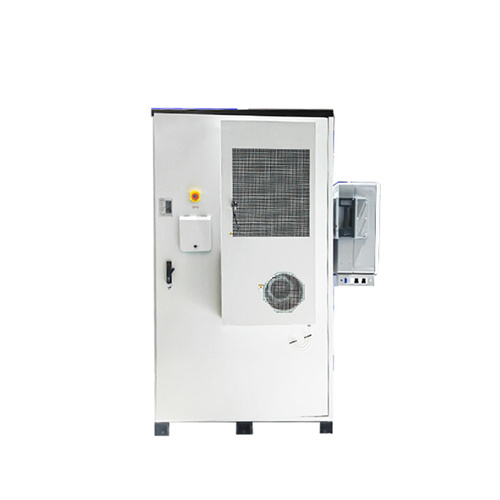
Sodium battery price per kwh Botswana
The average cost for sodium-ion cells in 2024 is $87 per kilowatt-hour (kWh), marginally cheaper than lithium-ion cells at $89/kWh.. The average cost for sodium-ion cells in 2024 is $87 per kilowatt-hour (kWh), marginally cheaper than lithium-ion cells at $89/kWh.. Based on material costs of $4 per kWh there could be $8 to $10 per kWh sodium ion batteries in the future. This would be ten times cheaper than energy storage batteries today.. A typical sodium-ion battery has an energy density of about 150 watt-hours per kilogram at the cell level, he said. Lithium-ion batteries can range from about 180 to nearly 300 watt-hours per . . Botswana Sodium Ion Battery Market is expected to grow during 2023-2029 Botswana Sodium Ion Battery Market (2024-2030) | Competitive Landscape, Outlook, Share, Segmentation, Industry, Growth, Companies, Forecast, Trends, Analysis, Value, Size & Revenue. Our researchers forecast that average battery prices could fall towards $80/kWh by 2026, amounting to a drop of almost 50% from 2023, a level at which battery electric vehicles would achieve ownership cost parity with gasoline-fueled cars in the US on an unsubsidized basis. [pdf]FAQS about Sodium battery price per kwh Botswana
How much energy does a sodium ion battery use?
A typical sodium-ion battery has an energy density of about 150 watt-hours per kilogram at the cell level, he said. Lithium-ion batteries can range from about 180 to nearly 300 watt-hours per kilogram. I asked Srinivasan what he makes of CATL’s claim of a sodium-ion battery with 200 watt-hours per kilogram.
Will sodium-ion batteries dominate the future of long-duration energy storage?
With costs fast declining, sodium-ion batteries look set to dominate the future of long-duration energy storage, finds AI-based analysis that predicts technological breakthroughs based on global patent data. Sodium-ion batteries’ rapid development could see long-duration energy storage (LDES) enter mainstream use as early as 2027.
Will China lead the way in sodium-ion battery production?
Although the companies are yet to commercialise their technologies, Chinese battery company Great Power last year announced a 50MW/100 megawatt-hour LDES project to power a data centre, demonstrating that sodium-ion batteries are already under consideration for LDES. “China will probably lead the way for sodium-ion battery production,” adds Gorski.
Are sodium ion batteries a good investment?
Analysing 30 LDES technologies, the research found sodium-ion batteries to hold the most promise due to their fast improvement rate – around 57% in 2024. They offer more efficiency in round-trip energy use, greater operational flexibility and lose less energy during storage and supply.
How much energy does a first-generation sodium battery produce?
CATL’s first-generation sodium battery generates 160-watt-hours per kilogram. This is 10% less energy than iron LFP batteries and 40% less than mass produced nickel batteries. CATL plans to increase the energy density of next generation sodium ion to 200 Wh/kg.
Will sodium-ion batteries disrupt the LDEs market?
Credit: Fahroni/Shutterstock. Sodium-ion batteries are set to disrupt the LDES market within the next few years, according to new research – exclusively seen by Power Technology’s sister publication Energy Monitor – by GetFocus, an AI-based analysis platform that predicts technological breakthroughs based on global patent data.