WIND ENERGY POTENTIAL OF AZERBAIJAN – ANALYSIS
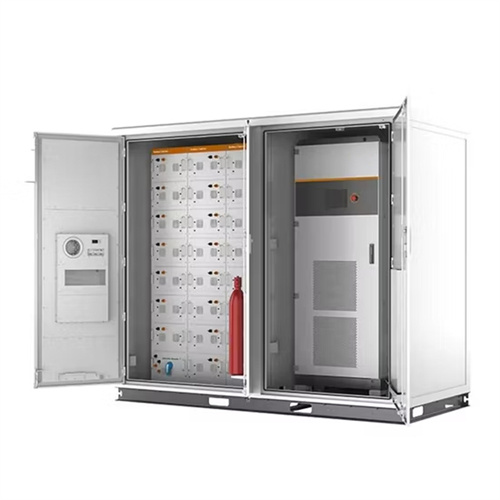
Energy storage cabinet market space analysis drawing
Energy storage systems (ESS) are increasingly deployed in both transmission and distribution grids for various benefits, especially for improving renewable energy penetration. Along with the industrial acceptanc. . ••We present an overview of energy storage systems (ESS) for grid a. . Energy storage systems (ESS) are continuously expanding in recent years with the increase of renewable energy penetration, as energy storage is an ideal technology for he. . ESS can be classified, according to the energy form in which the electricity is stored, into five main categories: 1) mechanical, 2) electrochemical, 3) chemical, 4) elec. . To facilitate the discussion on the grid applications of ESS, we first classify ESS based on the physical locations in the grid where these systems are installed (or their grid domains). E. . Although ESS bring a diverse range of benefits to utilities and customers, realizing the wide-scale adoption of energy storage necessitates evaluating the costs and benefits of ESS i. . The Federal Energy Regulatory Commission (FERC) has given a definition of electric storage resources (ESR) to cover all ESS capable of extracting electric energy from the. [pdf]
Storage container wind energy
It serves as a rechargeable battery system capable of storing large amounts of energy generated from renewable sources like wind or solar power, as well as from the grid during low-demand periods. [pdf]FAQS about Storage container wind energy
What is a containerized energy storage system?
A Containerized Energy-Storage System, or CESS, is an innovative energy storage solution packaged within a modular, transportable container. It serves as a rechargeable battery system capable of storing large amounts of energy generated from renewable sources like wind or solar power, as well as from the grid during low-demand periods.
What is a wind storage system?
A storage system, such as a Li-ion battery, can help maintain balance of variable wind power output within system constraints, delivering firm power that is easy to integrate with other generators or the grid. The size and use of storage depend on the intended application and the configuration of the wind devices.
What is the best energy storage option for offshore wind turbines?
Low-cost, long-duration energy storage is needed for renewable energy integration. Liquid metal battery storage may be preferred option over Li-ion storage. Integrating battery directly into offshore wind turbine has potential cost savings. Electrical line sizes can be reduced by 20% with 4 h of storage capacity.
What is co-locating energy storage with a wind power plant?
Co-locating energy storage with a wind power plant allows the uncertain, time-varying electric power output from wind turbines to be smoothed out, enabling reliable, dispatchable energy for local loads to the local microgrid or the larger grid.
What is energy storage container?
SCU uses standard battery modules, PCS modules, BMS, EMS, and other systems to form standard containers to build large-scale grid-side energy storage projects.
Can battery storage be used to control wind energy generation?
Thus, if battery storage is going to be used to significantly levelize and control wind energy generation for day-to-day operation, then new storage options will be needed that are operable over much longer durations in the context of storage capacity relative to the plant average or rated power.

Terra energy generation company Azerbaijan
Azerenergy (Azerenerji Joint Stock Company (JSC)) is the largest electrical power producer in the . It also maintains the largest distribution network in the country, although the regional power networks are being privatized. Azerenergy was recreated as a state-owned joint stock company in 1996, by decree of President . [pdf]FAQS about Terra energy generation company Azerbaijan
Where does energy come from in Azerbaijan?
Two-thirds of energy in Azerbaijan comes from fossil gas and almost a third from oil. Azerbaijan is a major producer of oil and gas, much of which is exported. Most electricity is generated by gas-fired power plants.
Where are the power plants located in Azerbaijan?
The main power plants (both are thermal) are near Shirvan (Janub TPP – 780 MW) and Mingechaur (Azerbaijan TPP – 2,400 MW). The power of the country's electro-energy system has reached 7,172.6 MW. Currently, the system's capacity is 5,200 MW and the peak power required is around 3,750-3,900 MW.
Which energy sources are used in the transport sector in Azerbaijan?
Most oil products used in the transport sector are produced in Azerbaijan. TFC consists mainly of natural gas (43%) and oil products (39%), followed by electricity (15%). Renewable energy sources, including hydro, contributed 1.5% to total energy supply in 2022 and 6% (1.8 TWh) to electricity supply.
What is Azerbaijan's energy regulatory agency?
In 2017, the President of Azerbaijan signed a decree establishing the Energy Regulatory Agency under the Ministry of Energy to regulate relationships among producers, suppliers and transmission system operators and distributors, as well as customers in the field of electricity, heat and gas supply.
How will Azerbaijan's new power plant work?
Two of the existing steam turbines will be modernised and connected to the new power plant, reaching a total capacity of 1880MW. Once in operation, the plant will provide a reliable power supply throughout Azerbaijan which will have a positive impact on the electrical generation and transmission system countrywide.
Who is the largest electric utility in Azerbaijan and the Caucasus?
With more than 6 thousand staff in generation, transmission and dispatching, the Company is the largest electric power utility in Azerbaijan and the Caucasus. Azerenerji is in charge of power and heat energy generation as well as power transmission. The total installed generation capacity is over 6.8 GW.