ALUMINUM STORAGE BOXES

Composition of aluminum battery energy storage system
This review classifies the types of reported Al-batteries into two main groups: aqueous (Al-ion, and Al-air) and non-aqueous (aluminum graphite dual-ion, Al-organic dual-ion, Al-ion, and Al-sulfur).. This review classifies the types of reported Al-batteries into two main groups: aqueous (Al-ion, and Al-air) and non-aqueous (aluminum graphite dual-ion, Al-organic dual-ion, Al-ion, and Al-sulfur).. AlB represent a promising class of electrochemical energy storage systems, sharing similarities with other battery types in their fundamental structure. Like conventional batteries, Al-ion batteries comprise three essential components: the anode, electrolyte, and cathode.. Guidelines and prospective of aluminum battery technology. Abstract. Aluminum batteries are considered compelling electrochemical energy storage systems because of the natural abundance of aluminum, the high charge storage capacity of aluminum of 2980 mA h g−1/8046 mA h cm−3, and the sufficiently low redox potential of Al3+/Al.. In the search for sustainable energy storage systems, aluminum dual-ion batteries have recently attracted considerable attention due to their low cost, safety, high energy density (up to. . This stability and conductivity have facilitated the analysis of charge storage mechanisms in other battery systems, . The elemental composition of these phases was further analyzed using energy . [pdf]FAQS about Composition of aluminum battery energy storage system
Why are aluminum batteries considered compelling electrochemical energy storage systems?
Aluminum batteries are considered compelling electrochemical energy storage systems because of the natural abundance of aluminum, the high charge storage capacity of aluminum of 2980 mA h g−1/8046 mA h cm−3, and the sufficiently low redox potential of Al3+/Al. Several electrochemical storage technologies based on aluminum have been proposed so far.
Can aluminum batteries be used as rechargeable energy storage?
Secondly, the potential of aluminum (Al) batteries as rechargeable energy storage is underscored by their notable volumetric capacity attributed to its high density (2.7 g cm −3 at 25 °C) and its capacity to exchange three electrons, surpasses that of Li, Na, K, Mg, Ca, and Zn.
How much energy does an aluminum air battery use?
The specific energy of these batteries can be as high as 400 Wh/kg, which enables their use as reserve energy sources in remote areas. Aluminum-air batteries with high energy and power densities were described in the early 1960s. However, practical commercialization never began because this system presents some critical technological limitations.
Can aqueous aluminum-ion batteries be used in energy storage?
Further exploration and innovation in this field are essential to broaden the range of suitable materials and unlock the full potential of aqueous aluminum-ion batteries for practical applications in energy storage. 4.
What is a battery energy storage system?
Battery energy storage systems (BESS) Electrochemical methods, primarily using batteries and capacitors, can store electrical energy. Batteries are considered to be well-established energy storage technologies that include notable characteristics such as high energy densities and elevated voltages .
Are aluminum-air batteries a reserve system?
The inherent hydrogen generation at the aluminum anode in aqueous electrolytes is so substantial that aluminum-air batteries are usually designed as reserve systems, with the electrolyte being added just before use, or as “mechanically” rechargeable batteries where the aluminum anode is replaced after each discharge cycle.
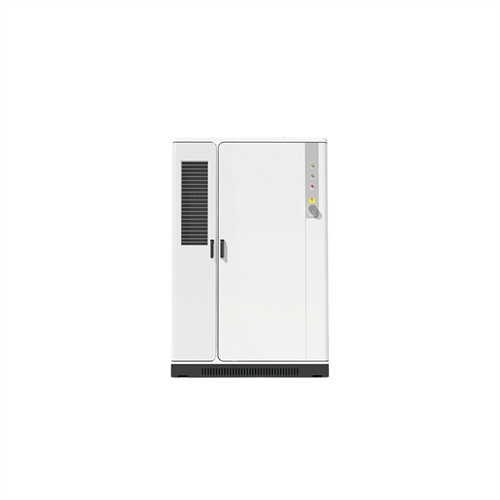
Aluminum alloy energy storage box quotation
The power battery aluminum shell (except the shell cover) of 3003 aluminum alloy can be drawn and formed at one time. Compared with the stainless steel shell, the welding process of the bottom of the box can be omitted.. The power battery aluminum shell (except the shell cover) of 3003 aluminum alloy can be drawn and formed at one time. Compared with the stainless steel shell, the welding process of the bottom of the box can be omitted.. Aluminum Energy Storage Box, Find Details and Price about Custom Aluminum Energy Box New Energy Storage Box from Aluminum Energy Storage Box - Jiangyin New Sulv Technology Co., Ltd.. FONNOV EV battery trays are made from the best aluminum alloys in terms of impact resistance, corrosion resistance, and strength. Making the enclosure from aluminum is also very effective in warding off electromagnetic interference that may affect sensitive car components.. The aluminum alloy TES is competitive with alternative current commercial and emerging technologies including lithium ion batteries and two tank liquid salt thermal energy storage. The latter is limited in temperature range by decomposition of salt limiting the maximum temperature to a value of about 565 °C.. Enhance risk management capabilities with new American-style options on Aluminum futures, the physically delivered futures contract with global warehouses in the United States, Europe, and Asia. [pdf]FAQS about Aluminum alloy energy storage box quotation
What is aluminum based energy storage?
Aluminum-based energy storage can participate as a buffer practically in any electricity generating technology. Today, aluminum electrolyzers are powered mainly by large conventional units such as coal-fired (about 40%), hydro (about 50%) and nuclear (about 5%) power plants , , , .
What is the calorific value of aluminum based energy storage?
Calorific value of aluminum is about 31 MJ/kg. Only this energy can be usefully utilized within aluminum-fueled power plant. So, it shows the efficiency limit. If 112.8 MJ are deposited, the maximum cycle efficiency of aluminum-based energy storage is as follows: 31 MJ 72.8 MJ = 43 %. This percentage represents the total-thermal efficiency.
Are aluminum-based energy storage technologies defensible?
The coming of aluminum-based energy storage technologies is expected in some portable applications and small-power eco-cars. Since energy generation based on aluminum is cleaner than that of fossil fuel, the use of aluminum is defensible within polluted areas, e.g. within megapolises.
What is the energy storage capacity of aluminium?
Energy storage capacity of aluminium Aluminium has a high storage density. Theoretically, 8.7 kWh of heat and electricity can be produced from 1 kg of Al, which is in the range of heating oil, and on a volumetric base (23.5 MWh/m 3) even surpasses the energy density of heating oil by a factor of two. 4.2. The Power-to-Al process
When will aluminium be used for energy storage?
Although it is possible that first systems for seasonal energy storage with aluminium may run as early as 2022, a large scale application is more likely from the year 2030 onward.
Are aluminum alloy sheets suitable for lithium-ion battery cases?
At HDM, we have developed aluminum alloy sheets that are perfect for cylindrical, prismatic, and pouch-shaped lithium-ion battery cases based on the current application of lithium-ion batteries in various fields. Our aluminum alloy materials are user-friendly, compatible with various deep-drawing processes.

What are the advantages of energy storage boxes
The benefits of energy storage systems are striking: drastically reduced reliance on fossil fuels, significant savings on energy bills, and a more resilient power grid.. The benefits of energy storage systems are striking: drastically reduced reliance on fossil fuels, significant savings on energy bills, and a more resilient power grid.. Storage enables electricity systems to remain in balance despite variations in wind and solar availability, allowing for cost-effective deep decarbonization while maintaining reliability.. Energy storage can save operational costs in powering the grid, as well as save money for electricity consumers who install energy storage in their homes and businesses.. Energy storage has four primary benefits we’ll cover: resiliency, cost savings, renewable integration, and additional grid benefits.. By storing energy locally, homes and businesses can reduce their reliance on fossil fuels and grid power, enhancing energy security and resilience. [pdf]FAQS about What are the advantages of energy storage boxes
What are the benefits of energy storage?
The benefits of energy storage systems are striking: drastically reduced reliance on fossil fuels, significant savings on energy bills, and a more resilient power grid. For utilities and large-scale energy users, storage offers a clever way to manage peak loads and delay costly infrastructure upgrades.
What are the benefits of energy storage systems for electric grids?
The benefits of energy storage systems for electric grids include the capability to compensate for fluctuating energy supplies: EES systems can hold excess electricity when it’s available and then contribute electricity supply at times when primary energy sources aren’t contributing enough, especially during periods of peak demand.
Why is electricity storage system important?
The use of ESS is crucial for improving system stability, boosting penetration of renewable energy, and conserving energy. Electricity storage systems (ESSs) come in a variety of forms, such as mechanical, chemical, electrical, and electrochemical ones.
What are the benefits of a storage system?
In practice, storage is essential for enabling the penetration of new renewable sources into the energy system: it’s essential for reducing reliance on fossil fuels, and thus greenhouse gas emissions into the atmosphere. The other major benefit of storage systems concerns the transmission grid.
How can electrical energy storage improve energy production?
Furthermore, in renewable energy installations like wind farms or photovoltaic systems, electrical energy storage can mitigate output variability—rapidly smoothing out the dips and spikes in power production caused by changing wind speeds or sunlight conditions.
Can energy storage help stabilize energy flow?
Energy storage projects can help stabilize power flow by providing energy at times when renewable energy sources aren’t generating electricity—at night, for instance, for solar energy installations with photovoltaic cells, or during calm days when wind turbines don’t spin. How long can electric energy storage systems supply electricity?