BESS PRACTICES OUR GUIDE TO BATTERY ENERGY STORAGE SYSTEMS AMP DEMAND

Qatar bess battery energy storage systems wiki
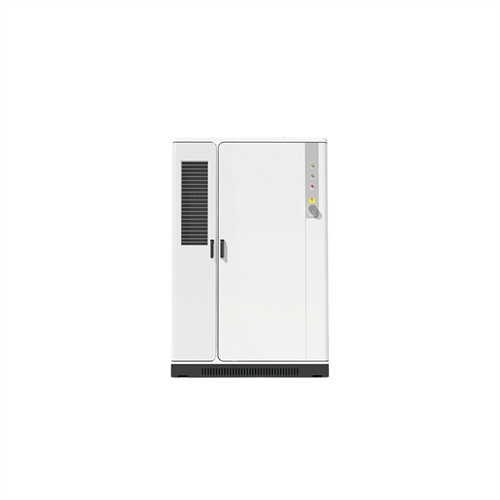
A battery energy storage system (BESS), battery storage power station, battery energy grid storage (BEGS) or battery grid storage is a type of energy storage technology that uses a group of batteries in the grid to store electrical energy. Battery storage is the fastest responding dispatchable source of power on. . Battery storage power plants and (UPS) are comparable in technology and function. However, battery storage power plants are larger. For safety and security,. . Since they do not have any mechanical parts, battery storage power plants offer extremely short control times and start times, as little as 10 ms. They can therefore help dampen the fast oscillations that occur when electrical power networks are operated close to. . • . Most of the BESS systems are composed of securely sealed , which are electronically monitored and replaced once their performance falls below a given threshold. Batteries suffer from cycle ageing, or deterioration caused by charge-discharge cycles. This. . While the market for grid batteries is small compared to the other major form of grid storage, pumped hydroelectricity, it is growing very fast. For example, in the United States, the market for storage power plants in 2015 increased by 243% compared to 2014. The. [pdf]FAQS about Qatar bess battery energy storage systems wiki
What is a 500 kilowatt-hour energy storage system in Qatar?
This project is the first of its kind in Qatar to integrate 500 kiloWatt-hours (kWh) of energy storage with the electricity grid, solar power and back-up diesel generators, providing both on-grid and off-grid operation with black start, Voltage (VAR) and Frequency regulation.
Is battery storage a good solution for Bess applications?
The introduction of novel battery storage technology can be a great solution to the present limited BESS applications. While developing the microgrid model, the decarbonization factor is needed to be considered.
Is Bess a distributed energy resource?
The study introduces BESS as a Distributed Energy Resource (DER) and delves into its specifics, especially within hybrid Photovoltaic (PV) and BESS setups. It covers various configurations and benefits of these hybrid systems, emphasising the role of BESS in enhancing controllable Renewable Energy (RE) integration.
Market demand for lithium battery energy storage
Global demand for Li-ion batteries is expected to soar over the next decade, with the number of GWh required increasing from about 700 GWh in 2022 to around 4.7 TWh by 2030 (Exhibit 1). Batteries for mobility applications, such as electric vehicles (EVs), will account for the vast bulk of demand in 2030—about 4,300 GWh; an. . The global battery value chain, like others within industrial manufacturing, faces significant environmental, social, and governance (ESG). . Some recent advances in battery technologies include increased cell energy density, new active material chemistries such as solid-state batteries, and cell and packaging production technologies, including electrode dry. . Battery manufacturers may find new opportunities in recycling as the market matures. Companies could create a closed-loop, domestic supply chain that involves the collection,. . The 2030 Outlook for the battery value chain depends on three interdependent elements (Exhibit 12): 1. Supply-chain resilience. A resilient battery value chain is one that is regionalized. We tracked 30 battery markets in major regions and found that in 2022 the world will consume or demand 420 GWh of Li -ion batteries for all applications. By 2030 that will rise to 2,722 GWh. [pdf]FAQS about Market demand for lithium battery energy storage
How will rising demand for lithium-ion batteries affect the battery industry?
Rising demand for substitutes, including sodium nickel chloride batteries, lithium-air flow batteries, lead acid batteries, and solid-state batteries, in electric vehicles, energy storage, and consumer electronics is expected to restrain the growth of the lithium-ion battery industry over the forecast period.
How big is the lithium-ion battery market?
The lithium-ion battery market is expected to reach $446.85 billion by 2032, driven by electric vehicles and energy storage demand. Report provides market growth and trends from 2019 to 2032, with a regional, industry segments & key companies an
What percentage of lithium-ion batteries are used in the energy sector?
Despite the continuing use of lithium-ion batteries in billions of personal devices in the world, the energy sector now accounts for over 90% of annual lithium-ion battery demand. This is up from 50% for the energy sector in 2016, when the total lithium-ion battery market was 10-times smaller.
What is the global market for lithium-ion batteries?
The global market for Lithium-ion batteries is expanding rapidly. We take a closer look at new value chain solutions that can help meet the growing demand.
Why did automotive lithium-ion battery demand increase 65% in 2022?
Automotive lithium-ion (Li-ion) battery demand increased by about 65% to 550 GWh in 2022, from about 330 GWh in 2021, primarily as a result of growth in electric passenger car sales, with new registrations increasing by 55% in 2022 relative to 2021.
How many batteries are used in the energy sector in 2023?
The total volume of batteries used in the energy sector was over 2 400 gigawatt-hours (GWh) in 2023, a fourfold increase from 2020. In the past five years, over 2 000 GWh of lithium-ion battery capacity has been added worldwide, powering 40 million electric vehicles and thousands of battery storage projects.

Direct benefits of battery energy storage systems
Additionally, battery storage contributes to grid stability, helps reduce energy expenditure, and is instrumental in advancing toward a sustainable and cleaner energy paradigm.. Additionally, battery storage contributes to grid stability, helps reduce energy expenditure, and is instrumental in advancing toward a sustainable and cleaner energy paradigm.. A utility-scale battery energy storage system (BESS) can stabilise the unstable, build grid resilience and enhance efficiency.. Renewables – Battery energy storage aligns solar and wind generation peaks with demand peaks. Residential and Commercial - lower energy costs, improves load factor, and manages demand peaks.. Battery storage is particularly useful for storing surplus electricity for optimal use and rapid delivery during spikes in energy demand (peak demand). [pdf]FAQS about Direct benefits of battery energy storage systems
Why is battery storage important?
Battery storage plays an essential role in balancing and managing the energy grid by storing surplus electricity when production exceeds demand and supplying it when demand exceeds production. This capability is vital for integrating fluctuating renewable energy sources into the grid.
What is battery storage?
Battery storage is a technology that enables power system operators and utilities to store energy for later use.
What is battery energy storage system (BESS)?
The sharp and continuous deployment of intermittent Renewable Energy Sources (RES) and especially of Photovoltaics (PVs) poses serious challenges on modern power systems. Battery Energy Storage Systems (BESS) are seen as a promising technology to tackle the arising technical bottlenecks, gathering significant attention in recent years.
Why are energy storage systems important?
Energy storage systems (ESS) serve an important role in reducing the gap between the generation and utilization of energy, which benefits not only the power grid but also individual consumers.
How does a battery storage system work?
The battery modules are the heart of the system, storing energy dispatching it when needed. A battery is made up of lithium cells, wired together to create a module. The modules are then stacked and combined to form a battery rack. Battery storage creates a smarter, more flexible, and more reliable grid.
What are the advantages and disadvantages of a battery?
The battery's biggest benefit is component recycling. Major drawbacks are the high cost per kWh (135 USD/kWh) and the material's unavailability. In terms of voltage, power, and energy, the LMO, LNMC, and LNCA batteries are excellent . For excellent lifetime and safety, utilize LFP and LTO batteries.