CRYSTALLINE SILICON VS. AMORPHOUS SILICON THE

Amorphous silicon solar panel Lebanon
Amorphous silicon (a-Si) is the non- form of used for solar cells and in . Used as for a-Si solar cells, or thin-film silicon solar cells, it is deposited in onto a variety of flexible substrates, such as glass, metal and plastic. Amorphous silicon cells generally feature low efficiency. [pdf]FAQS about Amorphous silicon solar panel Lebanon
What are amorphous silicon solar cells?
Used as semiconductor material for a-Si solar cells, or thin-film silicon solar cells, it is deposited in thin films onto a variety of flexible substrates, such as glass, metal and plastic. Amorphous silicon cells generally feature low efficiency.
What is an amorphous solar panel?
An amorphous solar panel operates on the same principle as a regular panel, using Si-based photovoltaic technology. However, instead of using individual cells made from Si wafers, it employs a thin layer of non-crystalline silicon that is applied to a substrate such as metal, glass, or plastic.
What are the advantages of amorphous silicon solar panels?
One of the main advantages of an amorphous silicon solar panel is its low manufacturing costs. Unlike crystalline cells that require high-temperature processing and precise crystalline structures, amorphous solar cells can be produced at a much lower expense.
Are amorphous solar panels better than c-Si solar panels?
Traditional c-Si cells experience a drop in efficiency as the temperature rises. In contrast, amorphous solar cells maintain their efficiency even in high-temperature environments. So if you live in a hot region like a desert or a tropical area, an amorphous solar panel may be a good choice.
How long do amorphous solar panels last?
An average amorphous solar panel has a lifespan of around 10-15 years, significantly shorter than traditional counterparts, which boast a durability of up to 25-30 years. This is because the amorphous silicon material used in a-Si modules degrades over time, leading to decreased efficiency and, ultimately, failure.
Is hydrogenated amorphous silicon suitable for solar photovoltaic cells?
Hydrogenated amorphous silicon (a-Si:H) has a sufficiently low amount of defects to be used within devices such as solar photovoltaic cells, particularly in the protocrystalline growth regime. However, hydrogenation is associated with light-induced degradation of the material, termed the Staebler–Wronski effect.
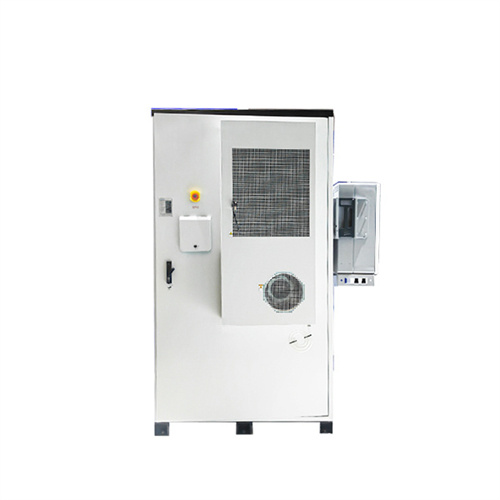
Degradation rate of crystalline silicon thin film photovoltaic panels
Recent study [7] has shown that thin-film technology has 1.5% per year of degradation rate even though the rate is getting better, while silicon solar cell module has 0.7% per year.. Recent study [7] has shown that thin-film technology has 1.5% per year of degradation rate even though the rate is getting better, while silicon solar cell module has 0.7% per year.. During the PV modules' operation in some different environmental conditions, the performance degradation rate is 0.58%–0.83% per year (Malvoni et al., 2020; Silvestre et al., 2018).. Alshushan and Saleh [8] reported that, on average, the peak power degradation of crystalline silicon PV modules was 13.86% of the initial value after a 30-year period. [pdf]FAQS about Degradation rate of crystalline silicon thin film photovoltaic panels
What is the degradation rate of photovoltaic modules?
According to the study conducted at the AEC PV Test Facility, three systems were used to assess the performance degradation of photovoltaic modules over a two-year period. The results from all three systems indicate that degradation rates ranged from 0.6% to 1.5% per year.
What is the power degradation rate of polycrystalline silicon?
The results show that the mean power degradation of monocrystalline silicon is 1.23% per year, polycrystalline silicon is 1.35% per year and amorphous silicon is 1.65% per year. Kaaya et al. show the degradation followed by the different modes. The degradation rate in the PV modules found to be 1.7–14.5% depends on temperature and locations.
What is the IC degradation rate of solar PV modules?
Results indicated Isc degradation rates of 2.15%, 1.02%, 1.03%, 1.01%, and 0.45% per year for 3, 5, 6, 7, and 8 years outdoor installed modules, respectively. The mean of every solar module per year was calculated. Then, the weighted mean was determined based on the number of solar PV modules.
What is the degradation rate of a PV system?
Both PV systems exhibited a degradation rate of 1%/year, which is likely attributed to aging effect. Jordan and Kurtz from the last 40 years of field testing study reviewed the degradation rates of different technologies PV modules and found a yearly average power degradation of 0.8%.
Can a model predict the degradation rate of solar PV modules?
A simple model was developed for predicting degradation rates of solar PV modules for the first 12 years of exposure in warm semiarid climatic conditions. This model can be used to estimate the performance of 90% of the solar PV modules as indicated by the warranty. The model indicates an exponential degradation rates of the modules.
Do defects affect the reliability and degradation of photovoltaic modules?
This review paper aims to evaluate the impact of defects on the reliability and degradation of photovoltaic (PV) modules during outdoor exposure. A comprehensive analysis of existing literature was conducted to identify the primary causes of degradation and failure modes in PV modules, with a particular focus on the effect of defects.

Lifespan of amorphous silicon solar panels
With a thickness of about 1 micrometer, these solar panels belong to the second-generation category of solar panels. Some amorphous solar panel advantages are- . Their affordability is an exclusive feature but lesser manufacturing costs results in the following drawbacks. . In terms of efficiency and lifespan, amorphous solar panels are not reliable and sustainable. Though they are much more economical than. . The average lifespan of amorphous solar panels ranges from 2 to 3 years.Continuous impact on performance due to light-induced. . Amorphous solar panels are the least efficient and hydrogen-doped panels are highly susceptible to light-induced degradation. The efficiency of these panels is just around 6. While monocrystalline and polycrystalline solar panels last for a minimum of 20–25 years, amorphous solar panels last only for 2 to 3 years. [pdf]FAQS about Lifespan of amorphous silicon solar panels
How long do amorphous solar panels last?
Normally, amorphous panels can last for 15 to 20 years, but they also degrade faster, which can significantly reduce their power output over time. What is the Lifespan of Monocrystalline Solar Panels? Monocrystalline solar panels are known for their durability and long lifespan. You can expect them to last anywhere from 25 to 35 years or more.
How efficient are amorphous solar panels?
Thanks to their single crystal structure, they have an efficiency rate that ranges from 15% to 20%. This essentially means that they convert more sunlight into electricity compared to other types of panels. On the other hand, amorphous solar panels have a relatively lower efficiency rate, typically around 7% to 10%.
What are amorphous silicon solar panels?
Since these panels don’t have cells, they also do not require the same physical connecting tabs that you’d find on a standard solar panel. Instead, manufacturers use a laser to pattern connections that carry electrical current. Amorphous silicon solar panels are somewhat of a niche product.
How efficient are amorphous silicon solar cells?
Record stable efficiency of the research-based single-junction amorphous silicon solar cell stands at 10.22% for 1.04 cm 2 device area , whereas conventional amorphous silicon solar cells are 5–8% efficient [7, 8].
How are amorphous solar panels made?
Amorphous solar panels are made by depositing a thin layer of silicon onto a backing substrate. This process requires less silicon, making amorphous panels relatively cheaper to produce and much more flexible than their monocrystalline counterparts.
Why are amorphous silicon solar cells degraded?
Poor charge transport mechanism and light-induced degradation effects are among the key factors leading to the degraded performance of single-junction amorphous silicon (a-Si:H) solar cells. Existent photovoltaic configurations, based on amorphous silicon carbide (a-SiC:H) window layer, have established efficiencies in the range of 7–10%.