INDUSTRIAL COMPUTER CABINET PIMAC

Kyrgyzstan industrial cabinet
The Cabinet of Ministers (Kyrgyz: Ministrler Kabineti) is an executive body presided by the Chairman of the Cabinet of Ministers of Kyrgyzstan. The status and provisions of the government are determined by Section V of the Constitution of Kyrgyzstan. The cabinet consists of the deputy chairmen, ministers and the chairmen of. . The Kyrgyzstan Parliament approved a smaller executive cabinet, consolidating several ministries and reducing their number from 22 to 16 on 3 February 2021; this was partially in response to the political unrest which. . • [pdf]
The working principle of liquid-cooled energy storage cabinet
The liquid-cooled system operates by circulating a liquid cooling medium between battery modules, absorbing and dissipating the heat generated during battery operation.. The liquid-cooled system operates by circulating a liquid cooling medium between battery modules, absorbing and dissipating the heat generated during battery operation.. Liquid-cooled energy storage cabinets use advanced liquid cooling technology to directly cool energy storage equipment through cooling liquid. [pdf]FAQS about The working principle of liquid-cooled energy storage cabinet
Why is liquid cooled ESS container system important?
Amid the global energy transition, the importance of energy storage technology is increasingly prominent. The liquid-cooled ESS container system, with its efficient temperature control and outstanding performance, has become a crucial component of modern energy storage solutions.
What are the benefits of liquid cooled energy storage systems?
High Energy Density: The efficient heat dissipation capabilities of the liquid-cooled system enable energy storage systems to operate safely at higher power densities, achieving greater energy densities.
Are liquid cooled battery energy storage systems better than air cooled?
Liquid-cooled battery energy storage systems provide better protection against thermal runaway than air-cooled systems. “If you have a thermal runaway of a cell, you’ve got this massive heat sink for the energy be sucked away into. The liquid is an extra layer of protection,” Bradshaw says.
Why is air cooling a problem in energy storage systems?
Conferences > 2022 4th International Confer... With the energy density increase of energy storage systems (ESSs), air cooling, as a traditional cooling method, limps along due to low efficiency in heat dissipation and inability in maintaining cell temperature consistency. Liquid cooling is coming downstage.
What is liquid-cooled ESS container system?
The introduction of liquid-cooled ESS container systems demonstrates the robust capabilities of liquid cooling technology in the energy storage sector and contributes to global energy transition and sustainable development.
What is the difference between air cooled and liquid cooled energy storage?
The implications of technology choice are particularly stark when comparing traditional air-cooled energy storage systems and liquid-cooled alternatives, such as the PowerTitan series of products made by Sungrow Power Supply Company. Among the most immediately obvious differences between the two storage technologies is container size.
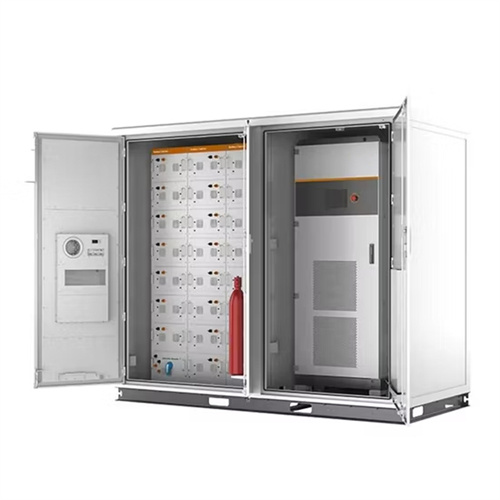
Energy storage cabinet container size standard
Standard shipping containers are commonly used for energy storage systems. They come in standard sizes of 20 or 40 feet in length1. Integrated battery energy storage system containers are also available in 10ft, 20ft, and 40ft sizes2. For example, a typical container has dimensions of 12.2 m x 2.4 m x 2.9 m (40 ft x 8 ft x 9.5 ft)3.. Standard shipping containers, typically 20 or 40 feet in length, offer ample space for housing BESS components while maintaining a compact footprint.. Standardized 10ft, 20ft, and 40ft integrated battery energy storage system container.. 320 ft2 or 29.7 m2; Seismic rated, Stackable Loss Dimensions: 12.2 m x 2.4 m x 2.9 m (40 ft x 8 ft x 9.5 ft) [pdf]FAQS about Energy storage cabinet container size standard
What is energy storage container?
SCU uses standard battery modules, PCS modules, BMS, EMS, and other systems to form standard containers to build large-scale grid-side energy storage projects.
What is a containerized battery energy storage system?
Containerized Battery Energy Storage Systems (BESS) are essentially large batteries housed within storage containers. These systems are designed to store energy from renewable sources or the grid and release it when required. This setup offers a modular and scalable solution to energy storage.
What are battery energy storage systems (Bess) containers?
Battery Energy Storage Systems (BESS) containers are revolutionizing how we store and manage energy from renewable sources such as solar and wind power. Known for their modularity and cost-effectiveness, BESS containers are not just about storing energy; they bring a plethora of functionalities essential for modern energy management. 1.
How many MWh can a container hold?
Range of MWh: we offer 20, 30 and 40-foot container sizes to provide an energy capacity range of 1.0 – 2.9 MWh per container to meet all levels of energy storage demands. Optimized price performance for every usage scenario: customized design to offer both competitive up-front cost and lowest cost-of-ownership.
What are indoor energy storage cabinets?
Step into a realm of efficiency even within confined spaces – our indoor energy storage cabinets revolutionize energy optimization. Tailored for controlled environments, they ensure unparalleled performance while safeguarding your investment. With us, your energy solutions are smart, efficient, and space-conscious.
Why should you choose a container energy storage unit?
With us, outdoor settings become realms of energy empowerment, where every condition is met with steadfast power. Unleash the potential of instant, customizable power solutions – our container energy storage units redefine mobility. From hybrid-ready innovations to tailored energy at your command, we transform the notion of on-demand energy.