RENEWABLE ENERGY STORAGE SYSTEMS WHY DID THE DEMAND FOR ESS

Iceland ess energy storage systems
Our planet is entrenched in a global energy crisis, and we need solutions. A template for developing the world's first renewable green battery is proposed and lies in storing electricity across the grid. Iceland generates 100% of its electricity from renewable resources including 73% from hydropower and 27% from. . With aging infrastructure and renewable energy (RE) generation on the rise, there has never been a more urgent need for a modern electricity grid. Many envision this modernized smart grid based on its capacity to integrate RE. . Originally when we set out on this idea, the leading-edge technology for digitally modelling our fancy electric grid was the Grid CommandTMDistribution package developed by the brilliant. [pdf]FAQS about Iceland ess energy storage systems
What is the largest energy storage investment in the Nordics?
It is a great honor to inaugurate the largest energy storage investment in the Nordics, with 211 MW now connected to the power grid. Thanks to the efforts of Ingrid Capacity and BW ESS, we are reducing grid congestion and enabling increased power production.
Why do we need an ESS?
Renewable energy's growth and utilization have been greatly limited owing to its intermittent, unreliable, and unregulated electrical output. Within that case, an ESS may be used to balance out the functioning of renewable energy sources while simultaneously serving as a secondary power supply.
What is Sweden's largest energy storage investment?
Sweden’s largest energy storage investment, totaling 211 MW, goes live, combining 14 sites. 14 large-scale battery storage systems (BESS) have come online in Sweden to deploy 211 MW / 211 MWh into the region.
How does ESS work in a small-scale power system?
Most small-scale power systems do not have the power generation dispatch technique where ESS can play a role, namely time-shifting. Time shifting is almost similar to load levelling from the generation side. The ESS unit will absorb the surplus energy during off-peak hours and inject the stored energy during peak hours.
Why should ESS devices be used during the 'off-peak' demand phase?
Moreover, during the “off-peak” demand phase, an ESS device can absorb sustainable power and undertake peak shaving during the “peak” load period. This will not only improve the amount of wind energy that can be accommodated in the system but also minimize wind energy restrictions. 5.2. Technological challenges
What are the applications of energy storage system?
The energy storage system applications are classified into two major categories: applications in power grids with and without RE systems and applications in detached electrification support. This section presents an extensive discussion of the applications of various ESS.

Austria energy storage systems ess
Falling prices for battery storage systems, public subsidies and increased motivation on the part of private or commercial investors led to a strong increase in sales of photovoltaic battery storage systems in Austria in 2020. In 2020 for instance, 4,385 photovoltaic battery storage systems with a cumulative usable storage. . Of the total of 875 local and district heating networks surveyed, heat accumulators have been installed as an element of flexibility in 572 heating. . Heat and cold can be stored in buildings and sections of buildings. If buildings have a large mass and good thermal insulation, this results in thermal inertia that can be used for load shifting. Plastic hoses through which a heat. . The examination covered hydrogen storage & power-to-gas, innovative stationary electrical storage systems, latent heat-accumulators and thermochemical storage.. [pdf]FAQS about Austria energy storage systems ess
Does Austria have a market for energy storage technologies?
A study 1 carried out by the University of Applied Sciences Technikum Wien, AEE INTEC, BEST and ENFOS presents the market development of energy storage technologies in Austria for the first time.
How many photovoltaic battery storage systems are there in Austria?
Of these, approx. 94% were built with public funding and 6% without. The total inventory of photovoltaic battery storage systems in Austria therefore rose to 11,908 storage systems with a cumulative usable storage capacity of approx. 121 MWh.
What are energy storage systems?
Efficient and reliable energy storage systems are central building blocks for an integrated energy system based 100% on renewable energy sources.
Can energy storage systems be used in practical operations?
Innovative storage technologies and new fields of application for the use of energy storage systems are being researched and demonstrated in practical operations as part of national and international research and development activities.
Is Austria a good place to invest in energy storage?
Austria has already gained major technological expertise in the field of electricity and heat storage. Numerous Austrian companies (including mechanical engineering, assembling and engineering as well as research and development) are already working on solutions for energy storage.
How big is Austria's hydraulic storage power plant capacity?
In 2020, Austria had a hystorically grown inventory of hydraulic storage power plants with a gross maximum capacity of 8.8 GW and gross electricity generation of 14.7 TWh. This storage capacity has already played a central role in the past in optimising power plant deployment and grid regulation.
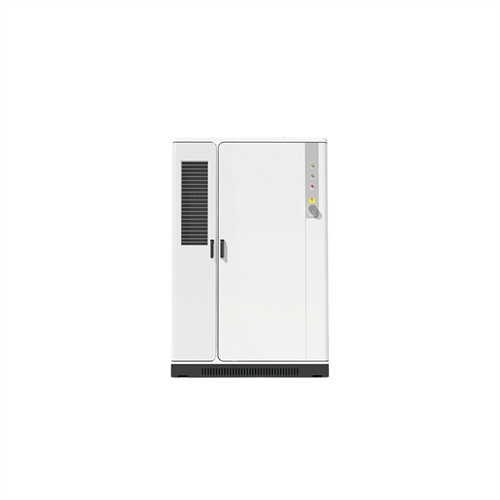
Market demand for lithium battery energy storage
Global demand for Li-ion batteries is expected to soar over the next decade, with the number of GWh required increasing from about 700 GWh in 2022 to around 4.7 TWh by 2030 (Exhibit 1). Batteries for mobility applications, such as electric vehicles (EVs), will account for the vast bulk of demand in 2030—about 4,300 GWh; an. . The global battery value chain, like others within industrial manufacturing, faces significant environmental, social, and governance (ESG). . Some recent advances in battery technologies include increased cell energy density, new active material chemistries such as solid-state batteries, and cell and packaging production technologies, including electrode dry. . Battery manufacturers may find new opportunities in recycling as the market matures. Companies could create a closed-loop, domestic supply chain that involves the collection,. . The 2030 Outlook for the battery value chain depends on three interdependent elements (Exhibit 12): 1. Supply-chain resilience. A resilient battery value chain is one that is regionalized. We tracked 30 battery markets in major regions and found that in 2022 the world will consume or demand 420 GWh of Li -ion batteries for all applications. By 2030 that will rise to 2,722 GWh. [pdf]FAQS about Market demand for lithium battery energy storage
How will rising demand for lithium-ion batteries affect the battery industry?
Rising demand for substitutes, including sodium nickel chloride batteries, lithium-air flow batteries, lead acid batteries, and solid-state batteries, in electric vehicles, energy storage, and consumer electronics is expected to restrain the growth of the lithium-ion battery industry over the forecast period.
How big is the lithium-ion battery market?
The lithium-ion battery market is expected to reach $446.85 billion by 2032, driven by electric vehicles and energy storage demand. Report provides market growth and trends from 2019 to 2032, with a regional, industry segments & key companies an
What percentage of lithium-ion batteries are used in the energy sector?
Despite the continuing use of lithium-ion batteries in billions of personal devices in the world, the energy sector now accounts for over 90% of annual lithium-ion battery demand. This is up from 50% for the energy sector in 2016, when the total lithium-ion battery market was 10-times smaller.
What is the global market for lithium-ion batteries?
The global market for Lithium-ion batteries is expanding rapidly. We take a closer look at new value chain solutions that can help meet the growing demand.
Why did automotive lithium-ion battery demand increase 65% in 2022?
Automotive lithium-ion (Li-ion) battery demand increased by about 65% to 550 GWh in 2022, from about 330 GWh in 2021, primarily as a result of growth in electric passenger car sales, with new registrations increasing by 55% in 2022 relative to 2021.
How many batteries are used in the energy sector in 2023?
The total volume of batteries used in the energy sector was over 2 400 gigawatt-hours (GWh) in 2023, a fourfold increase from 2020. In the past five years, over 2 000 GWh of lithium-ion battery capacity has been added worldwide, powering 40 million electric vehicles and thousands of battery storage projects.