TTB BIG BAG LIFTING BEAM BULK BAG SPREADER

How long can the milk storage bag be kept in the fresh-keeping box
If your breastmilk is freshly expressed (that is, it hasn't been frozen), it is safe for use for 6 to 8 hours when kept below room temperature (26°C or lower) or for 72 hours when stored in the ref. . If your breastmilk is freshly expressed (that is, it hasn't been frozen), it is safe for use for 6 to 8 hours when kept below room temperature (26°C or lower) or for 72 hours when stored in the ref. . Kept fresh in a cooler with an ice pack [59 °F (15 °C)] for 24 hours. Stored fresh in the refrigerator [39 °F (4 °C)] for up to 4 days.. Breast milk can be stored at 0° F or colder for up to 12 months, although using it within 6 months is best.. Breastmilk can be stored for 5 days in a fridge running at 4°C or lower.* *One study has shown fresh breastmilk can be used for up to 8 days when the fridge temperature is kept stable at 4°C or below.. Milk can be stored in an insulated cooler bag with frozen ice packs for up to 24 hours when you are traveling. If you don’t plan to use freshly expressed milk within 4 days, freeze it right away. [pdf]FAQS about How long can the milk storage bag be kept in the fresh-keeping box
How long can breast milk be stored?
Never store breast milk in disposable bottle liners or plastic bags that are not intended for storing breast milk. Freshly expressed or pumped milk can be stored: At room temperature (77°F or colder) for up to 4 hours. In the refrigerator for up to 4 days. In the freezer for about 6 months is best; up to 12 months is acceptable.
How long can milk be stored?
Milk can be stored: Up to four days in a standard refrigerator. Up to three to four months inside a standard refrigerator freezer. Up to six to 12 months in a separate deep freezer. In an insulated cooler bag with frozen ice packs for up to 24 hours while traveling.
How long can pumped milk be stored?
Freshly expressed or pumped milk can be stored: At room temperature (77°F or colder) for up to 4 hours. In the refrigerator for up to 4 days. In the freezer for about 6 months is best; up to 12 months is acceptable. Recommended storage times are important to follow for best quality. Want to learn more?
Can breast milk be stored in the refrigerator or freezer?
Do not store breast milk in the door of the refrigerator or freezer. Storing it further inside will help protect the breast milk from temperature changes when the door opens and closes. If you don't think you will use freshly expressed breast milk within 4 days, freeze it right away. This will help to protect the quality of the breast milk.
How do you store breast milk in a container?
Containers you can use to store milk include: Glass is the first choice for breast milk storage. It preserves the components of milk the best. But glass breaks, so keep in mind that some daycare centers won’t allow it. Hard-sided plastic containers are the second-choice alternative for breast milk storage.
How long can you keep frozen breast milk?
However, using the frozen milk within six months is optimal. Keep in mind that research suggests that the longer you store breast milk — whether in the refrigerator or in the freezer — the greater the loss of vitamin C in the milk. It's also important to note that your breast milk changes to meet your baby's needs.

Big renewable energy companies Pakistan
Renewable energy in Pakistan is a relatively underdeveloped sector; however, in recent years, there has been more and more interest to explore resources for the . Around 10.57% of Pakistan’s total installed power generation capacity (in 2020) comes renewables (wind, solar and ). Most of Pakistan's renewable energy comes from . As per the vision of the Prime Minister, there is the aim to “induct 20% of by t. [pdf]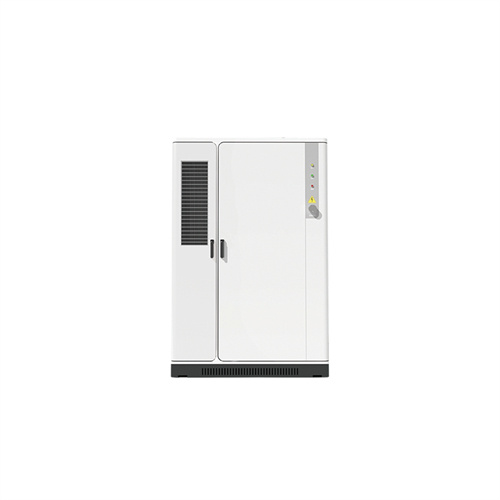
Sri Lanka big solar power
What is the Future Outlook for Solar Energy in Sri Lanka?Government targets aim for 70-80% from renewables by 2030, up from just 2% in 2018. This will require $2-3 billion in solar investments by 2025.Rooftop solar technical potential is estimated at 6 GW, with policy support needed to unlock adoption. . Utility-scale solar parks of 100-200 MW are planned in Poonerin, Siyambalanduwa, and Hambantota. . 更多项目. What is the Future Outlook for Solar Energy in Sri Lanka?Government targets aim for 70-80% from renewables by 2030, up from just 2% in 2018. This will require $2-3 billion in solar investments by 2025.Rooftop solar technical potential is estimated at 6 GW, with policy support needed to unlock adoption. . Utility-scale solar parks of 100-200 MW are planned in Poonerin, Siyambalanduwa, and Hambantota. . 更多项目. Sri Lanka generates solar-powered energy from 3 solar power plants across the country. In total, these solar power plants has a capacity of 44.4 MW. [pdf]FAQS about Sri Lanka big solar power
Why should Sri Lanka adopt solar energy?
Adopting solar energy brings several key advantages for the country: Renewable and sustainable - Solar is a renewable energy source that does not produce greenhouse gas emissions. Expanding solar contributes to Sri Lanka's goals of increasing renewable energy to 70-80% of the energy mix by 2030.
What is the installed solar capacity in Sri Lanka?
Solar power is an emerging energy source in Sri Lanka. According to the Ceylon Electricity Board (CEB), the installed solar capacity was around 164 MW as of 2018, contributing 0.4% of total electricity generation. However, solar adoption is rapidly increasing driven by favorable policies.
Does Sri Lanka have solar power?
Sri Lanka is an island nation blessed with abundant sunshine and solar energy potential. However, solar power currently contributes just 0.4% of the country's electricity mix. With prudent policies and investments, Sri Lanka can tap into its rich solar resources to meet a substantial share of its power needs from a clean, renewable source.
What is Sri Lanka's energy policy?
Sri Lanka’s energy policy is underpinned by the Government’s ambitious target of generating 70% of power from renewables by 2030. Solar power is one of the cheapest sources of energy and Sri Lanka has strong solar resources.
Is Sri Lanka a good country for solar PV?
As a developing nation, Sri Lanka has been mission and distribution infrastructure. Solar Photovoltaic development in Sri Lanka has been gaining momentum with the rapidly falling cost of technolo-gy and global trends in the improve-ment in solar PV technology as a clean form of energy resource.
Will Sri Lanka achieve 1000 MW of solar power by 2030?
As per the Sustainable Energy Authority of Sri Lanka, the installed solar PV capacity increased over 10 times from 12 MW in 2015 to around 164 MW by 2018. Grid-connected rooftop solar accounted for 147 MW while large-scale solar farms contributed 17 MW. The government aims to achieve 1,000 MW of solar capacity by 2030.