US DEVELOPER REDEUX ENERGY EYES 2GW SOLAR AND

Solar developer companies Angola
1. Quipungo Solar Power Plant The Quipungo Solar Power Plant is a 150MW Solar PV power project located in Huila, Angola. It is being developed by Abu Dhabi Future Energy. . 2. Solenova Solar PV Park Solenova Solar PV Park is a 50MW Solar PV power project in Namibe, Angola. . 3. Lubango Solar PV Park . 4. Quilemba Solar PV Park . 5. Luena Solar PV Park . [pdf]FAQS about Solar developer companies Angola
What is the Angola solar project?
The Angola Solar Project includes seven utility-scale projects, including one installation that is the largest utility-scale solar installation in Sub-Saharan Africa. In four southern provinces of Angola, we’re deploying 728 MW of utility-scale solar PV, solar minigrids with battery storage, home power kits, and potable water.
How many MW of solar power will be installed in Angola?
The projects will be installed in the Moxico, Lunda Norte, Lunda Sul, Bie, and Malanje provinces, adding 296 MW of solar capacity and 719 MWh of battery energy storage system to the Angolan grid. The facilities will provide electricity to power one million consumers. Clean energy firm MCA Group has been tasked with the construction of the projects.
Who backed Sun Africa's 370 MW solar PV project in Angola?
Sun Africa was awarded the prestigious "ECA/DFI-backed deal of the year" by "TXF Perfect 10" for Sun Africa's 370 MW solar PV project in Angola. Sun Africa initiated this project, developed it, and arranged long-term financing. At 188.88 MWdc, the Biopio site in Benguela is the largest single solar PV project in Sub-Saharan Africa.
Where will a 50 MWp solar plant be located in Angola?
Italy’s Eni, and Angolan national oil company, Sonangol, have reached a final investment decision through its joint venture Solenova for the development of a 50 MWp solar plant in Angola. The plant will be located in the sunny city of Caraculo, situated in the Namibe Province.
Will a 150 MW solar plant help Angola?
An agreement for the development of a 150 MW solar plant was signed between Angola’s Ministry of Energy and Water and UAE-based renewable energy company Masdar in Dubai last December. The 150 MW project will produce electricity to power 90,000 homes, contributing to job creation, emissions reduction and efforts to increase national electrification.
Will Angola get 60% electricity by 2025?
Angola has set a target of 60% access to electricity by 2025 under the strategic plan ‘Visao 2025,’ of which solar is poised to play a central role. Supporting electrification as well as diversification, solar projects are being rolled out by the government alongside international partners and project developers.

Solar energy 4 square meters of electricity generated per day
Wattage is the output of solar panelsthat is calculated by multiplying the volts by amps. Here, the amount of the force of the electricity is represented by volts. The aggregate amount of energy used is expressed in amps (amperes). Output ratings on most solar panels range between 250 watts to 400 watts. . Here, a kilowatt-hour is the total amount of energy used by a household during a year. The calculatorused to determine the solar panels kWh needs the. . To consider the kilowatt required by the solar system, you need to use the average monthly consumption. Suppose you use 1400 kilowatt-hours per. [pdf]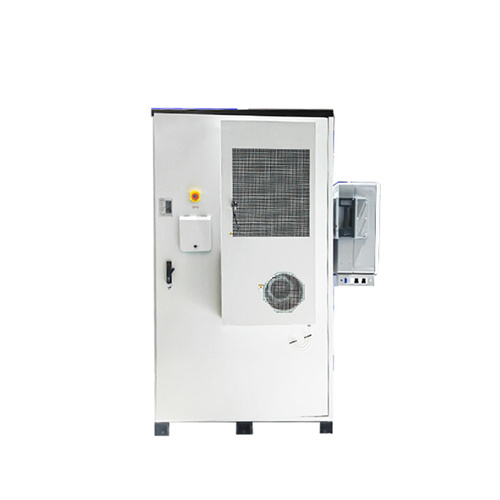
Taiwan moroccan agency for solar energy
Masen, the Moroccan Agency for Sustainable Energy, is a privately owned Moroccan company with public funding. It was created in 2010 to lead the Moroccan solar project to generate electricity from solar power by installing a minimum capacity of 2,000 MW by 2020 (the Noor Plan). In 2016, Masen became the Moroccan Agency for Sustainable Energy. Its remit was extended t. . Solar power in Morocco is enabled by the country having one of the highest rates of solar among other countries— about 3,000 hours per year of sunshine but up to 3,600 hours in the desert. has launched one of the world’s largest solar energy projects costing an estimated $9 billion. The aim of the project was to create 2,000 megawatts of solar generation capacity by 20. [pdf]FAQS about Taiwan moroccan agency for solar energy
What is Morocco's largest solar energy project?
Morocco has launched one of the world’s largest solar energy projects costing an estimated $9 billion. The aim of the project was to create 2,000 megawatts of solar generation capacity by 2020. The Moroccan Agency for Solar Energy (MASEN), a public-private venture, was established to lead the project.
Who supervises solar energy projects in Morocco?
The ministry also supervises the following institutions: a. MASEN - The Moroccan Agency for Solar Energy is a limited company with a Management and Supervisory Board . MASEN ensures the development of integrated projects for producing electricity from solar energy, and has a minimum total capacity of 2000 MW.
What is the Moroccan Agency for Solar Energy (MASEN)?
In 2010, the Moroccan Agency for Solar Energy (MASEN), a public-private venture, was set up specifically to implement these projects. Its mandate is to implement the overall project and to coordinate and to supervise other activities related to this initiative.
How many GWh will Morocco's solar power plant generate?
Tenders will be addressed by September 2010 and the entire project is expected to be operational by 2019. At full capacity, the solar power plants will generate about 4500 GWh, part of which will be exported. The project seeks to provide 10% of Moroccos electricity needs.
What can be done to boost the solar market in Morocco?
This market presents a huge potential for small scale projects (i.e., rooftop photovoltaic, biomass, solar pump). As such, complementary acts related to this Act should take into consideration the low income of the Moroccan people and propose financial mechanisms to boost the market.
Does Morocco need a primary energy supply?
The primary energy supply has increased significantly in the past. Morocco is highly dependent on imports of energy sources; in 2015, the dependency was about 94.5%. Morocco experienced a significant increase in demand for primary energy as it has increased by 0.36 TOE per capita in 2002 to 0.56 TOE in 2015 .